Wool bedding · Practical guide
How to Choose a Wool Mattress Topper for Your Sleep Style
A wool mattress topper can soften a firm bed, add a modest layer of cushioning, and bring wool’s breathable character into your sleep setup. The right choice depends less on a single “best” thickness than on what your mattress lacks, how you sleep, and how much care you are willing to give the fibers.
Published October 24, 2026
A mattress is a landscape of small pressures and shifting temperatures. At night, shoulders and hips settle into it; the room cools or warms; blankets move as the sleeper turns. A topper changes the first point of contact between the body and the bed. Wool adds a layer of resilient fiber between the sleeper and the mattress, but its feel depends on fill, thickness, construction, and the surface beneath it.
That makes choosing a wool mattress topper an exercise in observation. Is the mattress too firm at the shoulders? Does it feel comfortable at bedtime but grow clammy by dawn? Is the surface worn, or is the mattress itself sagging? A topper may make a sound but overly firm mattress feel more welcoming. It cannot reliably repair a broken support core or reverse deep sagging.
Begin with the change you want. Then compare how a topper is made, how it fits, and how it must be maintained. Those details matter more than broad promises about comfort. Wool is a natural fiber with a distinctive structure, but no material can guarantee a particular sleep result for every person.
First, identify what your bed needs
Spend a few nights noticing how the mattress feels rather than judging it only when you first lie down. Check whether discomfort is concentrated at pressure points or spread across the bed. Consider whether you wake because the surface feels hard, because you are too warm, or because the mattress does not support you evenly.
A topper is most useful when the underlying mattress is still supportive but its surface feel is not quite right. It can introduce a softer buffer and alter the sensation of firmness. If the bed dips markedly, feels unstable, or leaves your body unsupported, adding a soft layer may simply mask the problem for a time. A mattress that has lost its structural support may need attention beyond a topper.
- For a firm-feeling surface: look for enough wool fill and a construction that can create a noticeable layer of cushioning.
- For a mattress that feels warm or damp: consider wool’s moisture-managing and insulating qualities, while remembering that bedding, room temperature, sleepwear, and the mattress itself also affect comfort.
- For an uneven or sagging bed: assess the mattress first. A topper can change surface feel, but it is not a substitute for sound support.
- For a small adjustment: a lower-profile option may be preferable to a thick layer that substantially changes how the bed feels.
It can help to keep a simple sleep note for a week: where you feel pressure, whether you wake hot or cold, and whether discomfort changes when you alter your pillow or blankets. Such observations are not a diagnosis, but they can make your priorities clearer when comparing bedding materials.
What wool contributes
Wool fibers have a naturally crimped form. In a textile, the fibers can hold small pockets of air, contributing to insulation and a springy hand. Wool also takes up water vapor within the fiber, which is one reason wool bedding is often valued for helping manage moisture. The result is not a promise that a sleeper will never feel hot or damp; rather, wool offers a different kind of material behavior from a dense, non-absorbent surface.
In a topper, wool may feel gently yielding rather than sharply buoyant. Its response is shaped by the fiber, the amount of fill, the way the layers are arranged, and how firmly the material is held by its cover. A thickly filled topper can feel more cushioned than a thin one, but thickness alone does not describe the whole experience. Dense, compacted fill may feel different from a loftier layer, and quilted sections may distribute the wool differently from a more uniform construction.
Wool is also not identical across products. Fiber preparation, wool source, blend, and finishing can affect softness, resilience, and care requirements. A product description should tell you what the filling contains and whether it is pure wool or combined with other materials. If it does not, ask for clarification before deciding.
Natural does not automatically mean suitable for everyone. People differ in their comfort preferences and sensitivities. If you know you react to wool or to particular textile finishes, review the materials and consult the maker’s care and composition information. A removable, washable cover or a separate protector may also be useful, depending on the design.
Match the topper to your sleep position
Sleep position offers a starting point, not a rigid formula. Body shape, mattress firmness, and personal preference all influence how much cushioning feels comfortable. A topper should soften the contact surface without making the body feel poorly supported.
Side sleepers
Side sleeping concentrates more pressure around the shoulder and hip. If a firm mattress makes those areas feel compressed, a wool topper with enough depth and loft may provide a more forgiving surface. Pay attention to whether the shoulder can settle without pushing the neck out of alignment. The pillow matters here too: changing the bed’s surface can alter the distance between the head and mattress, so a familiar pillow may feel different afterward.
Rather than choosing the thickest option automatically, consider how much pressure relief you need and whether the topper is designed to retain its shape under repeated loading. Ask the maker how the fill is secured and whether the product is intended to be turned or rotated as part of regular care.
Back sleepers
Back sleepers often seek a balanced surface: enough softness to avoid a hard, unyielding feel, but not so much that the middle of the body seems to sink. A moderate layer may be a reasonable place to begin when the mattress itself is supportive. If a topper changes the bed so much that your lower back feels less comfortable, the added cushioning may be excessive for your setup.
Stomach sleepers
Stomach sleepers may prefer a relatively level, stable surface. A very plush topper can change the position of the torso and feel uncomfortable for some people. If you sleep mostly on your stomach, compare low-profile options and review the return policy, where available. A careful trial is more useful than assuming that softness will improve every bed.
Combination sleepers
People who change position during the night need a surface that feels comfortable across more than one posture. Consider how readily the topper returns to its shape after you move, as well as whether it bunches or shifts. Secure fit and even construction can be particularly important when the sleeper turns frequently.
Compare fill, thickness, and construction
Product labels sometimes emphasize a headline measurement, but useful comparison requires looking at several details together. Ask whether the listed thickness refers to the finished topper, the loft of the fill, or another measurement. Check whether the maker supplies a fill weight or density. If two toppers have similar thicknesses but different amounts of wool, they may not feel alike.
Construction determines how the filling behaves. Quilting or stitching can help hold wool in place, dividing it into sections and limiting movement. A stitched design may feel more structured, while another construction may allow a softer, less segmented surface. Neither is automatically superior: the best choice depends on the feel you want and the maker’s explanation of how the topper is built.
Look closely at the cover, too. The cover is the layer against the sheet and can influence the texture, breathability, and durability of the topper. A natural-fiber cover may be appealing to someone seeking an all-natural materials profile, but the exact fiber content and weave still matter. Check whether the cover is removable, whether it can be washed, and whether cleaning the full topper is possible.
- Fill amount: helps indicate how substantial the layer may be, though it should be considered alongside construction.
- Finished thickness: gives a broad sense of profile but does not measure softness or support on its own.
- Stitching and quilting: show how the filling is contained and whether it is divided into pockets or channels.
- Cover fiber: affects the feel at the surface and may determine how easily the topper can be cleaned.
- Edge design: can influence whether the topper stays aligned with the mattress.
Keep expectations grounded: a topper changes the surface layer, not the engineering of the mattress below. A thin topper is unlikely to transform a very hard bed into a deeply cushioned one, while a thick layer cannot guarantee that an unsupportive mattress will feel balanced.
Measure for fit before you buy
Dimensions are easy to overlook and costly to guess. Measure the mattress length and width, and note its depth, including any existing pad or protector that will remain in place. Compare those measurements with the topper’s stated size. Standard labels such as twin, queen, and king are useful, but product dimensions can vary by manufacturer and region.
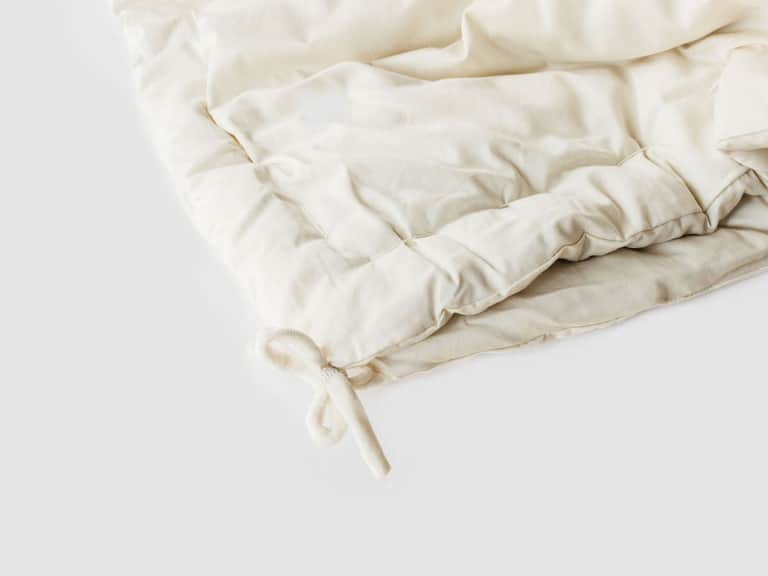
Consider how the topper will stay put. Some designs rely on their own weight; others may have corner straps, elastic, or another attachment method. A slippery mattress cover, a deep mattress, or a bed that moves when you turn may make a secure attachment especially helpful. Check that the attachment system is compatible with the thickness and shape of your mattress.
Also consider the fitted sheet. Adding a topper increases the height of the bed, and a sheet that already fits tightly may no longer stay in place. Measure the combined depth of mattress, topper, protector, and any other layers, then check the sheet’s pocket depth. A topper that fits the mattress but causes bedding to pull loose can undermine a comfortable arrangement.
For an adjustable bed, confirm that the topper is suitable for a flexing base and that its design will not fold, shift, or strain at the joints. When in doubt, ask the manufacturer rather than assuming that any mattress topper will work with a movable frame.
Care is part of the decision
Wool bedding often benefits from thoughtful maintenance rather than frequent washing. Exact instructions vary by product. Some toppers may be spot-clean only; others may have a washable cover, and a limited number may be designed for more extensive washing. Treat the care label as the authority. Washing a product in a way its maker does not recommend can cause shrinkage, distortion, clumping, or damage to the wool.
Before purchasing, read the care instructions in full. Ask whether the topper can be laundered at home, whether it requires professional cleaning, and how it should be dried. A large, wool-filled item may not fit safely in a household washing machine even if some cleaning is permitted. Never infer washability from the word “natural” or from the fact that another wool bedding item can be washed.
Routine habits can reduce the need for cleaning. Use a fitted sheet and, if appropriate for the product, a protector. Air the bed periodically in a dry, well-ventilated space, following the maker’s advice about sunlight and exposure. Address small spills promptly with the recommended method rather than saturating the filling. Store a topper only when clean and completely dry, in a breathable place that protects it from damp and pests.
Wool can have a natural scent when new, and its intensity may vary. Allowing the item to air according to its care instructions may help. If a scent is unusually strong or does not fade, contact the maker for guidance instead of applying fragranced sprays or cleaners that might affect the fibers.
Understand labels and sourcing claims
Claims such as “organic,” “natural,” “chemical-free,” and “sustainable” are not interchangeable. Read the specific material list and look for named certifications, including what part of the product they cover. A certificate might apply to wool, the cotton cover, or a facility rather than every component. If a certification matters to you, verify its scope with the seller or certifying organization.
Sourcing information can also be relevant. A transparent description may identify the wool’s country or region of origin, processing details, and where the topper is assembled. These facts help you understand a product’s supply chain, but origin by itself does not establish comfort, durability, or environmental impact. Consider such information alongside construction, care, warranty, and the manufacturer’s evidence for its claims.
For people with sensitivities, clear disclosure is especially useful. Review the filling, cover, thread, backing, and any added treatments. When details are missing, request them in writing before purchase. A well-described product makes comparison easier and helps you choose according to your own priorities.
A practical comparison checklist
When comparing wool mattress toppers, put the specifications side by side. This turns a broad search into a manageable set of questions.
- What change do I want: more cushioning, a softer surface, or a different temperature feel?
- Is my mattress still supportive and reasonably even?
- What is the topper’s stated size, thickness, fill weight, and composition?
- How is the wool secured, and what does the maker say about loft and settling?
- Does it have straps or another method to prevent movement?
- Will my fitted sheets still fit over the full bed height?
- Can the cover or topper be cleaned at home, and what are the exact instructions?
- Are the materials and any certification claims described clearly?
- What are the warranty, trial, and return conditions?
Return policies deserve particular attention because comfort is personal. Check whether the item can be returned after opening, whether a trial period applies, and who pays for return shipping. Read the conditions before removing tags or discarding packaging. If the seller offers no trial, be especially careful to compare measurements and construction details in advance.
Common mistakes to avoid
Choosing by thickness alone. A thicker profile may look more substantial, but it does not reveal density, resilience, or how the fill is distributed. Compare construction and fill information as well.
Expecting a topper to repair a mattress. A topper can adjust surface comfort, but it is not a structural fix for severe sagging or a damaged support system.
Assuming all wool is alike. Fiber source, preparation, blend, and cover materials can produce different results. Look for specific details rather than relying on a general label.
Ignoring care instructions. A topper that requires professional care may not suit someone seeking a fully washable bed layer. Confirm maintenance needs before buying.
Forgetting the rest of the bed. A new topper changes bed height and may affect sheet fit, pillow feel, and how blankets sit. Consider the full bedding arrangement, not just the topper in isolation.
A better night begins with a specific question
The most useful wool mattress topper is not necessarily the one with the longest list of claims or the greatest loft. It is the one that addresses a clear need, suits the mattress beneath it, fits securely, and comes with care instructions you can realistically follow.
Start by noticing where the bed disappoints you. If a firm but supportive mattress presses uncomfortably, compare fill amount and construction for a more cushioned feel. If you want to explore wool’s moisture-managing character, examine the full bedding system and your room conditions rather than expecting a topper to regulate everything on its own. Measure carefully, check the materials, and read the maintenance details before deciding.
Wool’s appeal lies partly in its quiet complexity: a crimped natural fiber that can hold air, yield under pressure, and interact with moisture in ways that differ from many synthetic fills. But material qualities are only one part of sleep comfort. The right fit comes from bringing those qualities together with your position, your mattress, your climate, and your habits.
Frequently asked questions
Does a wool mattress topper make a bed softer?
It can add cushioning and change the surface feel, depending on its fill amount and construction. The effect varies by product and mattress. It will not reliably correct a mattress that has lost its underlying support.
Are wool toppers suitable for every sleep position?
Many people can find a wool topper that suits their preference, but the right thickness and feel differ. Side sleepers may seek more cushioning at the shoulder and hip, while stomach sleepers may prefer a flatter surface. Personal comfort and mattress support remain important.
Can a wool mattress topper be washed?
Care instructions differ. Some are spot-clean only, some have removable washable covers, and others may allow limited laundering. Follow the manufacturer’s directions exactly and do not assume that a wool topper is machine washable.
How do I keep a topper from shifting?
Check whether it includes corner straps, elastic, or another attachment feature. Confirm that the system suits your mattress depth, and use correctly sized bedding to help keep all layers aligned.
What should I check before ordering?
Compare dimensions, thickness, fill composition, construction, attachment method, care instructions, certification details, warranty, and return terms. Also measure the combined height of your mattress and bedding so your sheets will still fit.