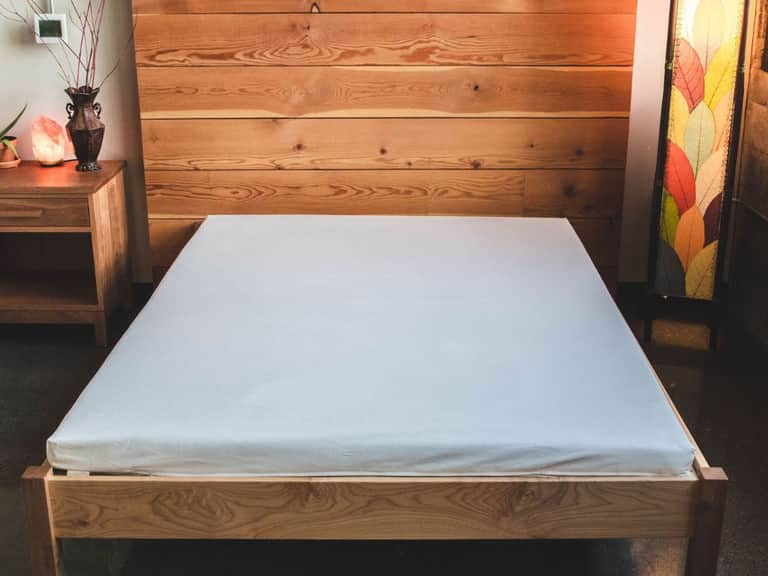
Latex mattress toppers add a responsive comfort layer to an existing sleep surface. Natural latex is known for buoyant support, pressure distribution, and airflow through its open-cell structure. These characteristics can influence how a bed feels without replacing the underlying mattress, making material choice and thickness important considerations.
When comparing latex mattress toppers, consider firmness, profile, and the condition of the mattress beneath them. A topper may soften a firm surface or add cushioning, but it cannot correct significant sagging. Natural latex is also resilient, so it tends to regain its shape after weight is removed.
The Natural Wool & Latex Shikibuton combines latex with wool in a foldable, floor-oriented sleeping design. Latex provides a supportive, springy base, while wool contributes cushioning and temperature regulation. Its construction offers an alternative to a conventional mattress topper, with functional benefits shaped by the materials and intended sleeping setup.
Material details matter across bedding, pillows, and organic mattresses. Latex may provide resilient support, while wool can help manage warmth and moisture near the sleep surface. For nursery use, caregivers should assess the product’s dimensions, firmness, intended age range, and applicable safety guidance rather than assuming adult bedding is suitable.
Care and compatibility depend on the specific construction. Check manufacturer guidance for airing, cleaning, rotation, and protection from moisture or prolonged direct sunlight. A latex mattress topper or wool-and-latex shikibuton should fit its supporting surface securely; appropriate support and regular inspection can help maintain comfort and function over time.
 Mattress Toppers